Retinol 101: Meet the Gentle Retinol That Works With You (Plus a Natural Alternative)
Ageing is a beautiful thing (like fine wine, or a well-loved pair of boots). It's a journey filled with stories, laughter and the odd questionable haircut. But some skin changes, like fine lines, uneven texture and sun spots, can feel less like a celebration and more like an uninvited guest at the party. That's where retinol comes in.
If you've heard all the retinol buzz but aren't sure it's for you, don't stress. We've got your hooves covered. In this guide we'll explain what retinol actually does, who it suits (and who should skip it), how to use it without the drama, and why our Slow-Release Retinol Anti-Ageing Active Serum was made to work with your skin, not against it. And if retinol isn't the right fit, we'll introduce you to Bakuchiol, our natural alternative to retinol.
What is retinol?

Retinol is a form of Vitamin A, and it's a long-time favourite of dermatologists and skincare fans alike. Here's the clever bit: retinol encourages your skin cells to turn over faster, so fresh, smooth skin comes to the surface sooner.
It also helps support collagen production, which over time can soften the look of fine lines, wrinkles, blemishes and uneven skin tone. Think of retinol as a personal trainer for your skin, minus the sweat and the 5am alarm.
Why is retinol so popular?
Retinol is often called the "gold standard" of anti-ageing skincare, and for good reason. It's one of the most researched skincare ingredients around, with decades of studies behind it. People reach for retinol to help with:
- Fine lines and wrinkles
- Rough or uneven skin texture
- Dullness and pigmentation
- Breakouts and blemishes
- Skin elasticity, radiance and the look of pores
In short, it's a multitasker. No wonder it's got a fan club.
Who is retinol for (and who should skip it)?
If you'd like to smooth fine lines, brighten your complexion, calm the odd blemish and give your skin a healthy boost, retinol might be just what you need. But it isn't for everyone, and we'd rather be honest about that.
Retinol is not recommended if you are:
- Pregnant or breastfeeding
- Under 18 (retinol is for adults only)
- Using prescription skin medications
- Dealing with very sensitive or reactive skin that flares easily
If any of these sound like you, Bakuchiol is a gentle, plant-based natural retinol alternative (more on that below).
Even retinol fans should press pause on retinol (and other strong actives) when:
- Sunburnt – wait until all redness and irritation has settled
- Getting a facial – stop a week before and for 5 days after
- Having facial waxing or laser – pause for a few days before and after
Not sure? Do a patch test first, or have a chat with your doctor or dermatologist before you start.
Why did MooGoo create a retinol?
We love skincare that actually works, but we also love keeping things gentle, simple and affordable. A lot of retinol products out there are too harsh, too drying or packed with extras your skin doesn't need. So, true to the MooGoo way, we made our own.
Our Retinol Anti-Ageing Active Serum uses 0.2% encapsulated retinol, a medium-strength formula designed to deliver the benefits with less irritation. Here's what makes it different:
- It's wrapped up for protection. Retinol can be a bit of a diva and breaks down easily. Encapsulating it in a natural liposome helps keep it stable and working hard.
- It releases slowly. Slow-release technology lets the retinol absorb gradually overnight, which helps minimise redness and flaking.
- It goes where it's needed. The targeted delivery system helps retinol reach deeper into the skin, rather than just sitting on the surface.
- It's got backup. Jojoba Seed Oil, Shea Butter, Phospholipids and Glycolipids help hydrate, nourish and support your skin barrier.
Like all our MooGoo skincare, it's proudly Australian made and free from parabens, synthetic fragrances and other nasties.
Looking for a natural alternative to retinol? Meet Bakuchiol

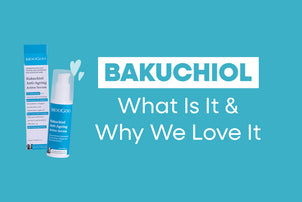
If retinol isn't right for you right now, you don't have to miss out. Our Bakuchiol Anti-Ageing Active Serum is our favourite natural alternative to retinol.
Bakuchiol (say it with us: bah-koo-chee-all) comes from the Babchi herb. It's often called "natural retinol" or "plant-based retinol" because research suggests it offers retinol-like benefits, such as smoothing fine lines and evening out skin tone, without the same irritation. It's not actually related to retinol, it just behaves a lot like it.
Bakuchiol is a great pick if you're pregnant or breastfeeding, have sensitive skin, or simply prefer a plant-based natural retinol. Our formula blends 1% Bakuchiol with Jojoba Oil, Shea Butter and natural Vitamin E for a silky, nourishing serum.
Retinol vs Bakuchiol: which one is for you?
|
|
MooGoo Retinol Serum |
MooGoo Bakuchiol Serum |
|---|---|---|
|
Key active |
0.2% encapsulated, slow-release retinol (Vitamin A) |
1% Bakuchiol from the Babchi herb |
|
Best for |
Adults wanting a proven anti-ageing ingredient |
Sensitive skin, or anyone wanting a natural alternative to retinol |
|
Pregnancy and breastfeeding |
Not recommended |
Suitable |
|
When to use |
Evenings only, start 1–2 times a week |
Morning or night |
|
Sun sensitivity |
Can increase it, so daily SPF is a must |
Doesn't increase it, but SPF is still smart every day |
Can't choose? You don't have to. Many people alternate the two, using retinol on some nights and Bakuchiol on others.
How to use retinol (slow and steady wins the race)

Our formula is gentle, but retinol is still a powerful ingredient, so ease into it. Here's how to add retinol to your routine:
- Start low. Use it 1–2 evenings a week, after cleansing.
- A little goes a long way. Apply a small amount to your face and neck, avoiding the delicate eye area.
- Moisturise. Follow with a moisturiser to lock in hydration. We love pairing retinol with our Ultra Hydrating Face Cream.
- Slip, slop, slap. Always wear sunscreen during the day, as retinol can make your skin more sensitive to the sun. (Especially important under the Aussie sun!)
- Keep it simple. On retinol nights, skip strong exfoliants and other actives. Save them for your non-retinol days.
- Build up gradually. If your skin is happy after a few weeks, you can slowly increase how often you use it.
A little tingling or dryness in the first few weeks can be normal while your skin adjusts. If you notice ongoing redness or irritation, scale back, or swap to Bakuchiol for a gentler option.
Retinol FAQs
Can I use retinol if I have sensitive skin? Our slow-release retinol was designed to be gentler than many traditional formulas. Still, patch test first and start slowly. If your skin is very reactive, our natural alternative to retinol, Bakuchiol, may be the better choice.
Can I use retinol in the morning? We recommend evenings only. Retinol can increase sun sensitivity, and it works overnight while your skin repairs.
Is natural retinol the same as retinol? Not quite. "Natural retinol" usually refers to plant-based ingredients like Bakuchiol that offer similar benefits. Bakuchiol isn't Vitamin A, but research shows it can deliver retinol-like results with less irritation.
How long does retinol take to work? Patience is key! Most people start noticing smoother, brighter skin after a few weeks of consistent use, with bigger changes over around 12 weeks.
Can I use retinol and Bakuchiol together? Yes. Many people alternate them, and Bakuchiol is gentle enough to use morning or night.
Ready to give retinol a go?
Ageing is natural and beautiful, and we're here to help your skin stay healthy and happy every step of the way. Whether you go for our gentle slow-release retinol or our natural alternative to retinol, you'll be in good hooves. Still not sure? Take our Face Skincare Quiz and we'll help you find your perfect match.
The research
- Wrinkle reduction over time: shows steady improvement, reaching up to 40% reduction by week 12. Farris, P. K., & Reynolds, J. R. (2014). Topical retinoids and the treatment of photoaging. Dermatologic Therapy, 27(6), 453–464.
- Texture smoothness over time: significant enhancement in skin texture, improving up to 60% by week 12. Griffiths, C. E. M., Kang, S., Ellis, C. N., & Voorhees, J. J. (1995). Treatment of photoaged skin with topical tretinoin. New England Journal of Medicine, 333(12), 816–820.
- Hyperpigmentation improvement over time: a 50% improvement by week 12. Kafi, R., et al. (2007). Improvement of naturally aged skin with vitamin A (retinol). Archives of Dermatology, 143(5), 606–612. Zasada, M., Budzisz, E., & Rotsztejn, H. (2019). Retinoids: Active molecules influencing skin structure formation in cosmetic and dermatological treatments. Advances in Dermatology and Allergology, 36(4), 392–397.
- Hydration improvement over time: increased hydration levels, peaking at 65% by week 12. Goldstein, J. L., & Kligman, A. M. (1993). Safety and efficacy of retinol (vitamin A) in the treatment of aging skin. Clinical Interventions in Aging, 8, 13–18.